18 Ways Effective Leadership Helps Employees Stay, Grow, and Succeed
Strong leadership gives employees clear direction, meaningful growth, and reasons to stay. This article shares practical ways leaders can build skills, recognize progress, remove barriers, and support career goals. Insights from experts in the field show how consistent daily actions can help employees grow and succeed.
- Respond to Concerns With Curiosity
- Honor Input Through Follow-Through
- Map Next-Level Paths
- Give Contributors Visible Credit
- Recognize Progress and Stretch Talent
- Align Assignments With Career Ambitions
- Deliver Candid Reviews Promptly
- Own Mistakes at the Top
- Rotate Invisible Work Fairly
- Train Frontline Managers
- Grant Genuine Ownership
- Build Skills Without Overload
- Reward Success Instead of Pressure
- Pair Clear Expectations With Autonomy
- Hold Development-Focused One-on-Ones
- Challenge Teams and Remove Barriers
- Tailor Support to Individual Strengths
- Provide Direct Daily Guidance
Respond to Concerns With Curiosity
Effective leadership creates an environment where employees can raise concerns, ask questions, and acknowledge uncertainty without expecting an automatic negative reaction. A leader’s response when someone brings forward difficult information can determine whether employees continue speaking candidly or begin withholding issues until they become harder to address.
When difficult information arises, I recommend that leaders respond first with curiosity by clarifying what happened, identifying what support or clarification is needed to address the work issue, and separating correctable mistakes from broader patterns. Accountability still matters, but it should focus on the work and the next appropriate step rather than embarrassment or blame.
This approach supports success because leaders receive important information earlier, when there may be more options for addressing it. It supports growth because employees can ask for guidance and learn from setbacks instead of spending energy concealing uncertainty.
It can also influence retention because employees are more likely to see a future in an organization where they are treated with respect during difficult conversations. In behavioral health leadership, I view candor as essential to sound decisions, ethical care, and sustainable professional development.
 Jonathan Goelz LCSW, Executive Director, All in Solutions
Honor Input Through Follow-Through
One principle that I’ve taken away from commercial sales is that the basis for a long lasting relationship is trust, accountability and follow through. I feel that this applies in managing a team as well. To me the key for leaders to retain good employees is following through. When employees provide input on items they are facing, workload, resources, opportunities for career growth, the leader needs to listen and determine action items and follow through with them.
I implement regular 1:1 meetings with employees to determine what barriers they are seeing in regards to accomplishing organizational goals, what skills they are looking to improve or grow, what tools would help them become more efficient and effective. Also, determine specific goals, agree upon measurable outcomes, provide employees with feedback that is relevant to them for areas of opportunity and areas of strength. And provide them with an opportunity to take on increased responsibilities.
I feel employees are more likely to want to continue to work for a manager or company when they feel like what they do matters, the manager or leader is investing time into their growth, and there is a path defined for growth within the organization.
 Caitlin Agnew-Francis, Commercial Sales Manager, Desky
Map Next-Level Paths
Leadership affects retention when people can see a credible path to their next role and get help making progress on it. At Ronas IT, we assign a grade after probation and review it at least annually. An employee starts the review with HR and identifies colleagues who can assess their work. The reviewers, HR and our CTO then name the specific areas to develop and recommend what the employee can do to close those gaps. We handle the grade review separately from the salary review, even though the two can sometimes happen together. The development conversation stays focused on evidence of the work and expectations for the next level.
A yearly review would leave too much time for an employee to wonder where they stand. HR holds monthly one-to-ones with every employee, so there is a regular opportunity to discuss progress or a roadblock before the next review. We also ask every four months how clear the career path feels in our developer experience survey. An individual can raise a concern in a one-to-one; the survey helps leadership see whether the path is clear across the team.
I wouldn’t treat a clear grade path as a promise that nobody will leave. An employee can ask, “What would I need to demonstrate next?” and get a specific answer grounded in their work. If leaders can’t give that answer, the next one-to-one should end with a concrete development step and a date to revisit it.
 Roman Surikov, Founder & CEO, Ronas IT | Software Development Company
Give Contributors Visible Credit
Effective leadership decides whether someone’s work actually gets seen. That’s the single biggest factor in whether people stay. A lot of the engineers and specialists I work with sit outside the founder’s time zone, outside the office, outside the hallway conversations where credit gets handed out informally.
If a leader doesn’t build a deliberate way to surface what those people contributed, the contribution disappears. And nobody stays somewhere their work disappears.
So I push founders to name the person, not the function. Not “the backend team shipped it” but the specific engineer who solved the thing, said out loud in front of the people whose opinions matter to them. It takes a leader about 30 seconds and it changes how that person sees their next two years at the company.
The growth piece follows from the same habit. When a leader actually knows who did what, they know who’s ready for more scope, who’s been quietly carrying a project, who’s stalled and bored. Promotion decisions stop being guesswork.
My honest read after years of placing senior technical people with U.S. founders is that compensation gets someone through the door and visibility keeps them. The teams with the lowest churn aren’t the ones paying the most. They’re the ones where leadership can describe each person’s work in specific terms.
 Val Narodetsky, CEO, Odesa
Recognize Progress and Stretch Talent
One way effective leadership keeps people is by making progress visible and personal. Most employees do not leave because of one bad day, they leave because they stop feeling that anyone notices their growth. As a founder, I learned from football that a good coach tells you exactly what you did well and what to fix next, and does it often.
In practice that means two things at Simply Noted. First, short regular one-on-ones focused on one growth goal for that person, not just status updates. Second, specific recognition, ideally handwritten. A card that says exactly what someone did and why it mattered gets kept on a desk for months, while a generic thanks in Slack disappears in an hour. Leaders who make people feel seen and give them stretch work tend to keep them, and those employees then grow into the leaders the company needs next.
 Rick Elmore, CEO, Simply Noted
Align Assignments With Career Ambitions
Effective leadership drives retention by ensuring an employee’s internal career roadmap is prioritized with the same rigor as the company’s product roadmap. Having scaled engineering and digital teams to over 600 professionals globally, I have found that high-performing talent rarely leaves for compensation alone; they leave when their skill set plateaus or when leadership fails to acknowledge their professional aspirations.
The primary cause of turnover is often a “listening gap.” When a leader fails to identify whether a team member wants to master a new AI framework or transition into management, engagement erodes. To prevent this, leaders must align daily project assignments with long-term career goals. If a developer is tasked with a complex cloud migration, it should not just be because a client requires it, but because that developer specifically wants to deepen their DevOps expertise.
This alignment transforms a standard task into a growth opportunity, turning the employee into a stakeholder in the project’s success rather than a service provider. Success is driven by leaders who act as architects of opportunity rather than supervisors of output. When leadership bridges the gap between organizational goals and personal ambitions, employees do not just stay-they evolve, creating a resilient culture that can scale globally without losing its identity.
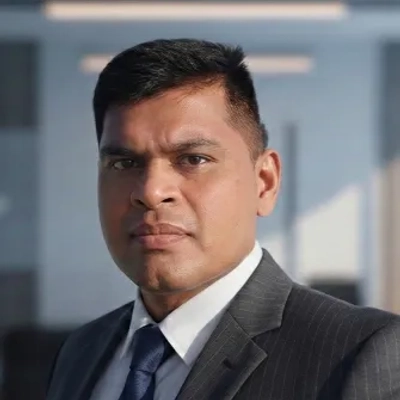 Amit Agrawal, Founder & COO, Developers.dev
Deliver Candid Reviews Promptly
When I ran an agency that grew to service in excess of 150 law firm clients, if there was an expectation that was not met, I made sure that the team was aware within a day, regardless of whether the numbers were good or terrible. I thought it important to be on top of dilemmas and, by being candid with my workforce, we could collectively brainstorm answers.
I’ve been in legal marketing for the last fifteen years and one thing I’ve noticed is people will quit if they don’t know where they stand. Counter intuitive to believe, but turnover will diminish when supervisors stop sugar coating negative reviews. Giving candid criticism helps a worker to understand how they can advance professionally. Employees will stick it out and work hard in order to enhance their careers.
People quit vague managers way more rapidly than hard nose managers. Being candid and truthful with your workers is the best perk of them all. Many managers prefer to postpone a negative report until they have a remedy, and I would encourage you to consider whether you do the same.
 Travis Hoechlin, CEO, RizeUp Media
Own Mistakes at the Top
I think one of the most important things a leader can do is take responsibility when something goes wrong.
In healthcare and other regulated industries, mistakes can have serious consequences. I’ve seen how quickly a culture can change when people are more worried about who’s going to get blamed than how to fix the problem.
As we’ve grown HCPA to around 200 people, I’ve learned that accountability has to start at the top. If I expect my team to own their decisions, admit mistakes and learn from them, I have to be willing to do exactly the same.
Building that kind of culture means people feel confident taking ownership and growing into leadership roles themselves. It’s also allowed me to step back from the day-to-day running of HCPA and focus on bigger opportunities, including building Dallo.
People don’t expect their leaders to get everything right. They want to know their leaders will take responsibility when things go wrong.

Rotate Invisible Work Fairly
Effective leadership influences retention by how fairly managers distribute the less visible work that determines who gets recognized and promoted. Sometimes tasks that don’t contribute directly to an employee’s promotable track record take some background tasks on, say spending several hours each week helping to onboard and integrate new hires. This should be included in their overall workload planning and performance evaluation.
I think it’s important that managers periodically think about who’s getting burdened with all of the not so light tasks, especially at performance review/goal-setting times. Where at all possible, this work should be rotated around. Oftentimes, it’s the most helpful, dependable employees who are asked time and time again to take meeting minutes or help out with other administrative-type tasks. The work might be done really well but the employee may get less opportunities to showcase his abilities since he spent so much of his time on such tasks. It can also be frustrating for employees when being a helpful, team-oriented player works against them in their own career progress. And in my opinion, it’s something to consider when thinking about employee retention.
 Teresa Tran, Chief Operating Officer, LaGrande Marketing
Train Frontline Managers
One way effective leadership influences whether employees stay, grow, and succeed is by investing in and supporting frontline managers. When managers receive training and coaching, they communicate expectations clearly and align daily work with business goals. That clarity and consistent leadership reduces confusion and frustration, builds trust, and creates room for development. At M&A Executive Search we prioritize coaching for new managers so they can address issues, lead by example, and maintain team engagement. Supported managers help employees feel valued, which increases the chances they will stay, grow, and perform.
 David Magnani, President & Managing Partner, M&A Executive Search
Grant Genuine Ownership
The most important thing, I find, has to do with whether the leader gives people genuine ownership or merely work to do. People don’t leave because their work is difficult; they leave because they feel like little gears, doing what they are told without any say in it. When you give someone real responsibility to achieve a real outcome and let them make the choices, they develop faster and stay, because they finally have the feeling that they are doing their job.
I’ve seen it firsthand. Those people that we empowered with real ownership, including the ability to do it differently from how I would have done it, became much more valuable employees than those that I managed too closely. Micromanaging does the opposite thing – it shows the person that they are not trusted, and that is why most of the talented people leave this place.
That is the flip side of the coin. It means that people might make decisions opposite to what you would have made and that they might even do something wrong sometimes. But if you want to raise professionals, you need to pay this price.
It is my belief that employees thrive in companies that empower them to have real responsibility rather than merely submit their work. The leader’s role is not to answer all questions but to help participants in the creative process arrive at those important conclusions.
Ivan Vislavskiy
CEO and Co-founder of Comrade Digital Marketing Agency
 Ivan Vislavskiy, CEO, Comrade Digital Marketing Agency
Build Skills Without Overload
Good managers provide staff with the route to succeed at what they do today and take on more in the future. They are clear on what success entails and what support is available to close the gap.
I would make that actionable through additional coaching on one next step. If this someone was in charge of booking patients, it might be learning to handle more complicated scheduling exceptions, and trying it on for a bit before you turn everything over to them.
The leader’s role is to enable development without overload. Increasing responsibilities before taking on time or capacity buffers turns professional growth into a liability for being dependable. Defined expectations, effective feedback, and dedicated learning time provide a compelling rationale for why employees are better off with the firm.
 Sanju Zachariah, Software Specialist, Management Consult for IT Automation, IT Program Manager, Founder & President, Portiva
Reward Success Instead of Pressure
The biggest mistake I see leaders making in trying to get growth from their teams is using too much pressure. Pressure is already everywhere at work. You’ve got deadlines and clients and performance reviews and bills to pay and a life to somehow live outside of work. The last thing you want is a boss who artificially increases or emphasizes that pressure to drive performance. Instead, I like to focus on finding ways to provide support where it’s needed, identifying and rewarding successes, and sharing the joy of major achievements.
 Ranjith Raghunath, CEO, CX Data Labs
Pair Clear Expectations With Autonomy
Effective leadership provides clear expectations and enough ownership for employees to develop their own judgment.
Employees are more likely to stay and grow when they understand how their work contributes to the business and when strong performance leads to greater responsibility, not just more tasks.
Good leaders also remove unnecessary friction by clarifying priorities, resolving blockers, providing feedback, and making timely decisions.
Retention is not just about employee satisfaction. It involves creating an environment where capable people can excel and continue to develop.
When employees consistently experience clarity, trust, and development, companies benefit from improved retention and stronger internal talent.
 Jamie Royce, CEO, MindCloud
Hold Development-Focused One-on-Ones
Make Growth Part of Every 1:1, Not a Once-a-Year Conversation
One of the clearest ways leadership influences whether employees stay and grow is through the regular cadence of 1:1s, not as status updates, but as actual development conversations.
In my 1:1s, I make it a point to talk about more than just what someone is working on that week. We talk about soft skills they’re building or should build, technical skills they want to grow, growth opportunities they might not have raised on their own, and I try to maintain a real personal connection, not just a professional checklist. I ask what they’re curious about outside their current role, not just how their current tasks are going, because the things people are curious about often point to where they actually want to grow next.
That consistency matters more than any single big gesture. Employees don’t usually leave because of one bad moment, they leave gradually, when they stop seeing a path forward or stop feeling like anyone is paying attention to their growth in the meantime. A once-a-year career conversation can’t catch that drift early enough. A recurring one can.
When someone feels like their manager is actually paying attention to where they want to go, not just what they’re delivering right now, it changes the relationship. They’re more likely to raise concerns early instead of letting frustration build quietly, more likely to ask for the stretch opportunity instead of waiting to be offered one, and more likely to see a future for themselves inside the company rather than outside it.
That’s the difference effective leadership makes. Not a single intervention or a one-time program, but a habit of consistently showing someone they’re seen, both as a contributor and as a person with their own direction.
 Shishir Khedkar, Head of Engineering
Challenge Teams and Remove Barriers
Employees will leave managers that make them feel invisible, but they won’t walk away from a manager that helps and supports them. Show them that you are reliable, follow through on what you say you are going to do and they will remain committed to you.
In the early stages, on-boarding them and being hands on as their mentor will be the key to keeping them in your team.
Challenge your team. Employees will progress quicker with a challenge, provided they understand what the expectation is and that they are regularly being challenged on progress. Ask them what they see their future goals are, as it could well be that they don’t realise what their job offers them. They will appreciate managers that think highly enough of them to challenge them.
At our company, we measure success on how long our employees stay and the quality of work that they produce. Longer serving employees will out-perform and help to mentor others that join. Celebrate overcoming the challenges, because this gives them a real sense of achievement. It isn’t always about promoting, but more about removing barriers. Make yourself accessible, so employees must be able to come to you and discuss issues without feeling that it will hold their career back.
 Emily Demirdonder, Director of Operations & Marketing, Proximity Plumbing
Tailor Support to Individual Strengths
Effective leaders take more of a coach-style approach with their team. Much like a sports coach, they focus on each employee’s strengths and weaknesses and help each person individually to grow their skill set, rather than managing everyone the same way.
In practice, this means having regular one-on-one meetings with your team members and talking about more than just their workload. Ask about their career goals and where they would like to be in a year or two. From there, you can work together on a plan, which might include training, a mentor, more challenging projects and/or time spent with other departments to get a better understanding of how the whole business works.
Employees want to grow and develop their skills. If they don’t get that opportunity with you, there is a very good chance your best people will end up leaving for a competitor who will give it to them. When an employee can see a future for themselves within the company, they are much more likely to stay, and they will usually put in the extra effort that leads to success for both them and the business.
The main downside is that this approach takes time, and it does require the leader to have some experience in mentoring/coaching. Overall, though, it is time well spent, and it is something every business owner can start with (even if it’s just one conversation a month).
 Evan Goodman, Business Coach, Evan Goodman
Provide Direct Daily Guidance
One of the biggest ways effective leadership influences whether people stay, grow and succeed is through the quality of feedback they receive.
Good leaders do not wait for an annual appraisal to tell someone what they are doing well or where they need to improve. They make honest, useful feedback part of everyday work. That gives people clarity, helps them build confidence and allows them to correct problems before they become career-limiting.
I have seen the opposite many times. Capable people can spend months or even years guessing how they are really viewed because managers avoid difficult conversations. Eventually, that uncertainty can turn into frustration, reduced confidence and disengagement.
For me, feedback is not simply a development tool. It is one of the clearest ways a leader shows that they are paying attention to someone’s success.
People deserve to know what they are doing well and what they could do better. Great leaders make sure they do.
 Andrew Porteous, Leadership Consultant & Executive Coach, EthicEyes